
Last Updated:2000/02/17
Dauphin's Castle
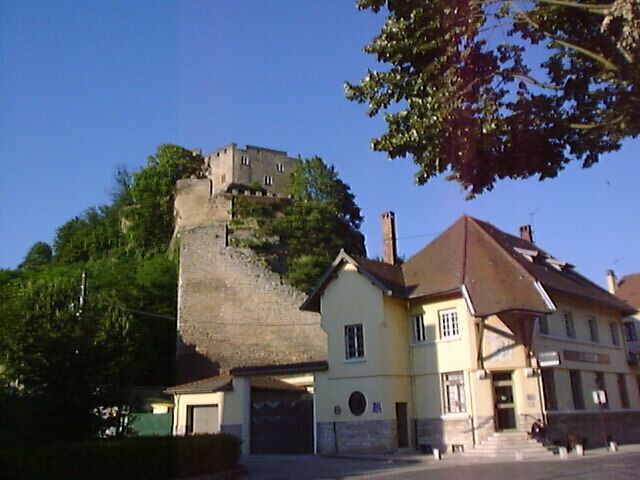
At the end of the XIIth century, the first
castle was built by the Barons of la Tour du Pin. In 1282, Cremieu came under
the control of the Dauphins. As a command main town, it was sheltered and
protected within its walls by the Chateau Delphinal which stood on the hill of
Saint-Laurent. In 1601, the Treaty of Lyon brought the struggle which had been
raging between Dauphine and Savoie since the XIIth century to an end; the north
of Dauphine thus was no longer a border area and its little fortresses were no
longer of use. In 1626, the Assembly of Notables ordered the demolition of all
the castles and fortresses, but the sorry state in which the castle of Cremieu
was by then saved it from total destruction. The castle was partially restored
in 1904. Since the Revolution it has been in private ownership. In front of the
entrance to the castle, the little square offers an exceptional view of the
town.
Dauphin's Castle2
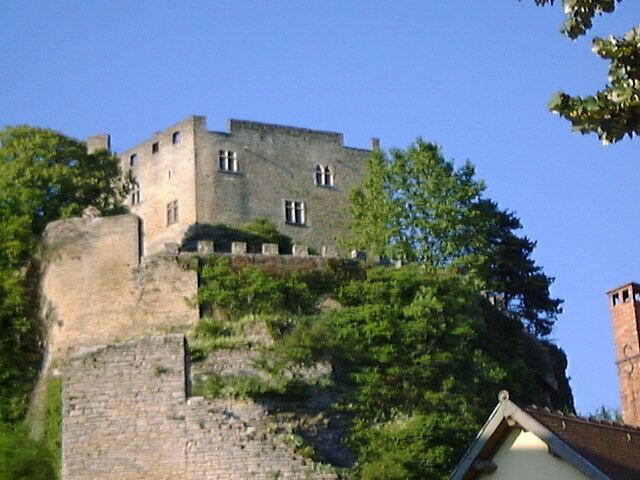
"Dauphin" was originally a nickname, but
from the XIIth century it became a title accorded to the successive three feudal
houses who reigned over the region of Dauphine. In 1349, when Dauphine was sold
to France, the title of dauphin was officially given to Charles V, the elder son
of Jean le Bon, and from that time on it was borne by the eldest sons of the
Kings of France.
Auberge de la Chaite
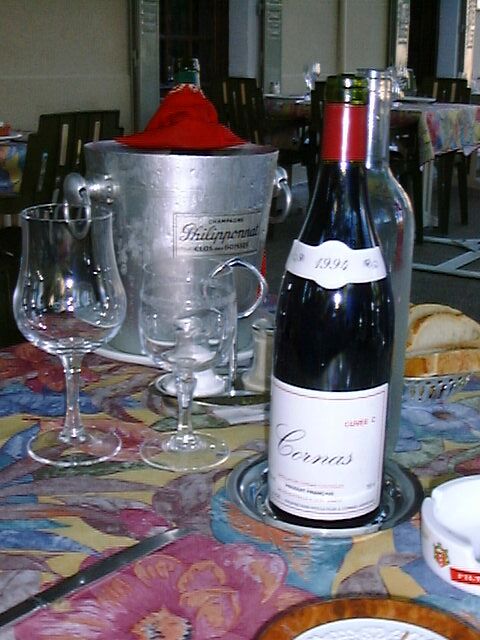
Excellent wine!!
Auberge de la Chaite Place des Tilleuls
Telephone: 04 74 90 76 63 Located opposite the Porte de la Loi, l'Auberge de la
Chaite has a rustic interior with a fireplace in winter and a terrace in the
shade of age-old lime trees in summer, and offers local dishes such as salad
with 'sabodets'. Menus from 75 to 180 FF. Children's menu 38 FF.
Porte Neuve or Porte de Francois
1er
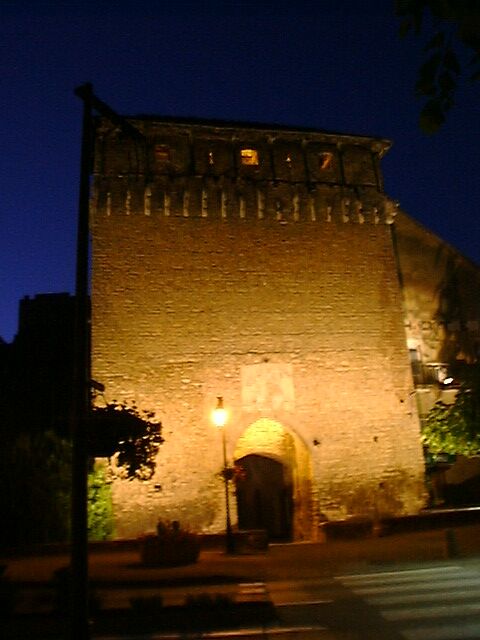
This gate was
built in the XVIth century in a former tower of the walls and replaced the Porte
de Quirieu in 1535. Its name refers to the many visits which King Francois I
made to Cremieu during the Italian wars and, principally, to his long stay in
the town in 1536. The fortification was protected by machicolations and an
opening for a canon, which can be distinguished from the Medieval vertical
loopholes for archers by its square shape
Augustinian Convent
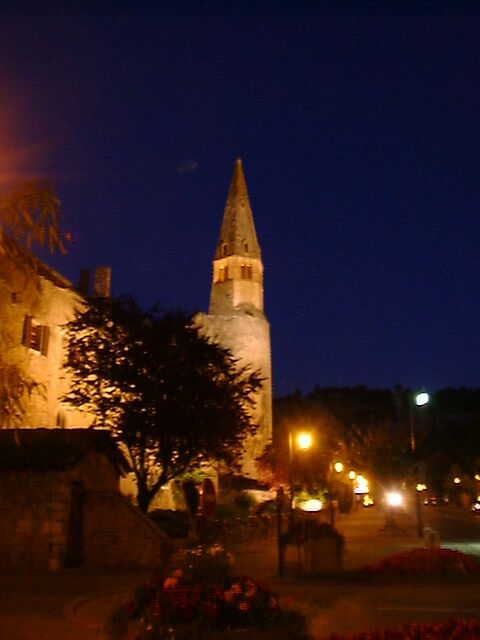
In December 1317, the Augustinian
monastery was founded in the town by the Dauphin Jean II. At its beginnings, it
was home to 10 monks. The chapel and the Abbot's wing were built up against the
medieval city wall and thus contributed to defending the town. The bell-tower
was built in 1508 at the top of a tower used for the defence of the town. The
Augustinian chapel opens onto a cloister and the main building has several
magnificent rooms, especially the chapter room and the refectory. After the
departure of the monks, the town bought the buildings when national property was
sold in 1791. From the original religious buildings through to the present there
have been many modifications, yet it remains the most prestigious architectural
ensemble in the town of Cremieu.
The hermits of Saint Augustine
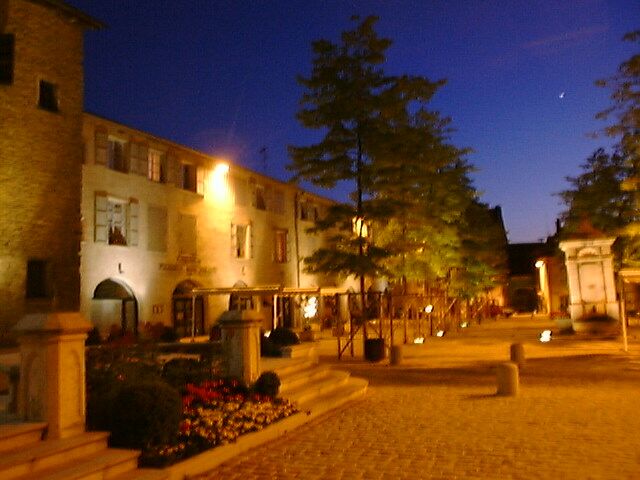
The order of the hermits of Saint
Augustine was founded in 1256 and demanded a life in obeisance of the Rule of
Saint Augustine : "A single soul and a single heart turned towards God". All the
members of the order were to live as one on their route that led towards God.
This unity and unanimity went hand in hand with the respect of plurality.
View of Bellecour and Fourviere
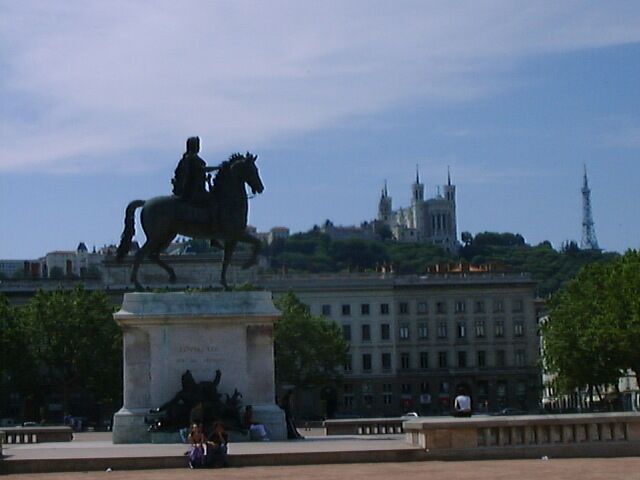
A 19th century industrial city Napoleon's
reign proved to be very favorable to Lyon. Industrial prosperity, lead by the
silk merchants, was on the upswing but technical progress, symbolized by
Jacquard's mechanical loom allowing one man to do the work of 6, had serious
social repercussions. In 1831 and 1834, the Canuts silk workers revolted. This
uprising, born of harsh working conditions, should not make us forget the humor
and liveliness of the Lyon people, as represented by the local puppet character,
Guignol. New construction work continued to change the cityscape: the opera
house, the court house, the stock exchange, the laying of two large boulevards
(now named Rue de la Republique and Rue Edouard Herriot) lined by elegant
Haussmanian facades, and the construction of the Tete d'Or Park. Urban
development continued under the Third Republic: the universities, the Prefecture
and the Fourviere Basilica were built at this time as was the Lumiere family
home, now the Lumiere Institute, where, in 1895, one of the world's most
important entertainment activities was invented: motion pictures. With its
discrete prosperity, held by family-run businesses, Lyon moved peacefully into
the 20th century.
戻る